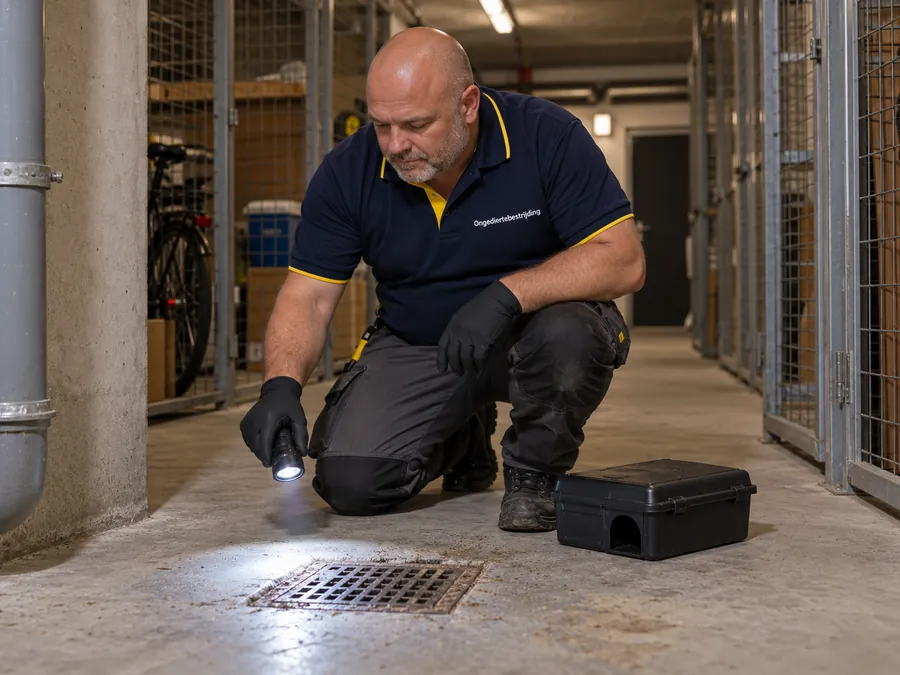
Mouse control in Rotterdam: recognising the signs
Mice rarely show themselves in daylight; what you notice instead is what they leave behind. House mice are mostly active at night and prefer to run along walls and behind furniture, out of sight. Look out for:
- small dark droppings the size of a grain of rice in cupboards, drawers and along skirting boards
- gnawed packaging, soap, cables or insulation
- rustling and scratching in the ceiling, the walls or behind the kitchen plinth
- a sharp, stale smell of urine in closed cupboards
- dark smudges where they run past again and again
One mouse usually means several. They breed quickly, so waiting only makes the job bigger.
How mice get into your home
A mouse needs a gap of only about 6 mm, and there is nearly always one somewhere: around a heating pipe that runs through the floor, behind the dishwasher, beside an air vent that does not fit properly or under the front door. In stacked housing, mice also travel through service shafts and crawl spaces from one home to the next.
In autumn, as the weather turns colder, they come indoors looking for warmth and food: crumbs, birdseed, dog biscuits and anything in an open bag in the cupboard. A mouse barely needs to drink, as it gets most of its moisture from what it eats. That is why our pest control in Rotterdam always starts with two questions: how is the animal getting in, and what is it after?
Our approach, step by step
Integrated pest management means poison is not the first thing we reach for. We start by inspecting the property inside and out, mapping runs and entry points. Then we seal openings with materials mice cannot gnaw through, such as wire wool and metal mesh, finished with sealant or mortar.
Only after that do we turn to the mice still indoors, using snap traps along their runs or, where needed, professional bait in locked bait stations. Only certified pest controllers may use these products. On a follow-up visit we check for remaining activity and make sure every gap has stayed closed. That combination is what makes mouse control last.
DIY: what helps and what does not
A couple of traps baited with peanut butter can deal with a single mouse. But if you keep catching without sealing the gaps, you will be at it forever. We advise against putting down poison yourself: a mouse that eats it often dies somewhere inaccessible, in the cavity or under the floor, and the smell can linger for weeks.
- Store food, including pet food and birdseed, in sealed glass or metal containers.
- Clear crumbs from under the fridge and behind the kitchen plinth regularly.
- Leave droppings where they are until after the inspection; they show us where the mice run.
- Talk to your neighbours or the VvE if you live in a flat or walk-up block.
Mice, or something bigger? Large droppings, burrows in the garden or heavy thumping under the floor may point to rats. In that case, read our page on rat control.